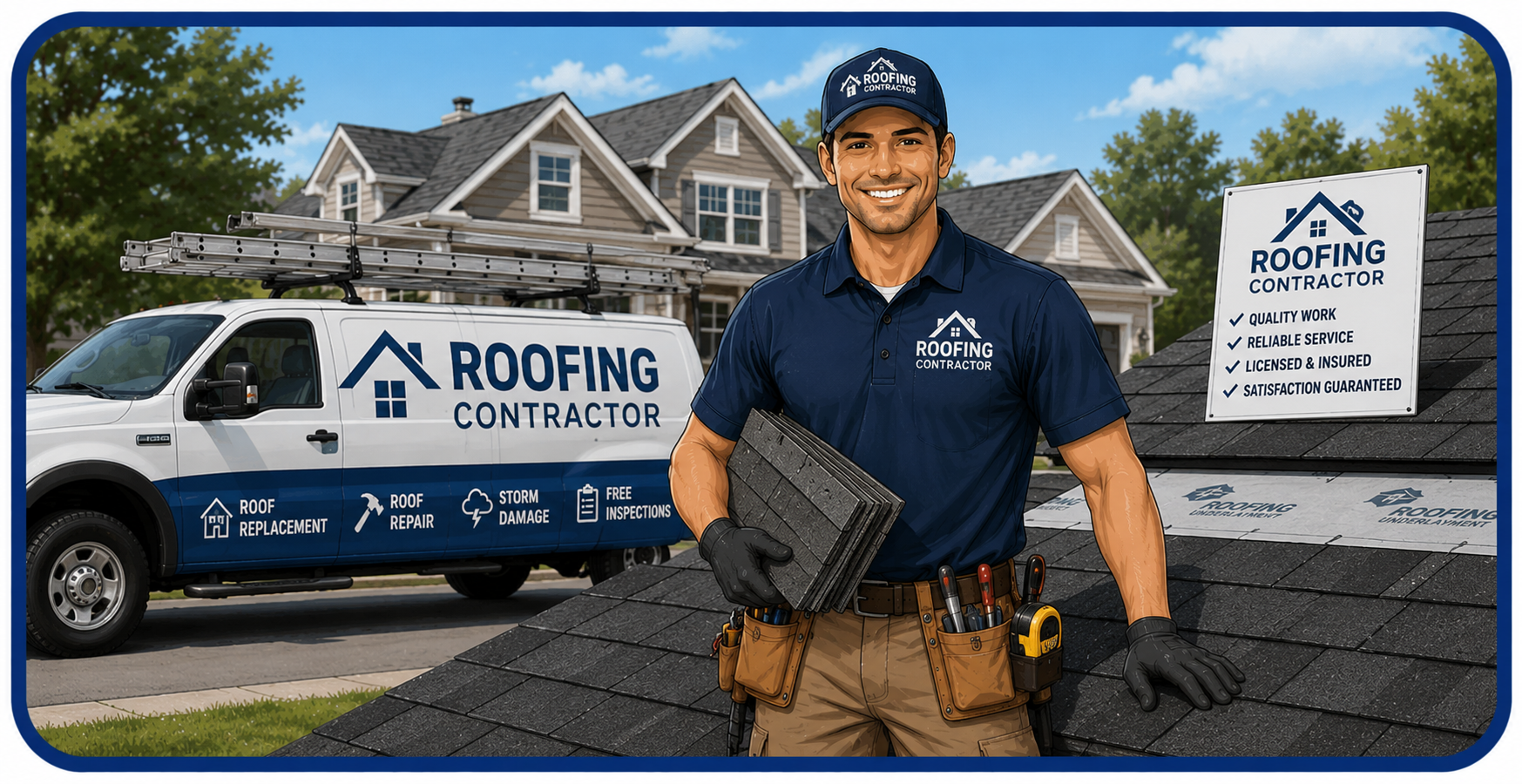
Long Island homeowners don't need another sales pitch about their roof — they need someone who shows up, explains what's actually wrong, and fixes it right the first time.

Nobody on our crew learned Roofing work from a training video. They learned it climbing real roofs in Long Island, ME, in real weather, on jobs where a wrong call meant a callback.
Ask to see our Long Island, ME license and insurance certificate and you'll have it in your hand before the estimate even starts.
A roof repair that's "close enough" tends to fail again within a year, usually during the exact storm it was supposed to handle. We don't build that way.

Proof of licensing before the first ladder goes up.
A midnight call gets the same urgency as a noon call.
You approve a number before the crew touches your roof.
Crews dispatched from within Long Island, ME, not another region entirely.
Catching a roof problem at the "annoying" stage is almost always cheaper than catching it at the "emergency" stage.
Homeowners in Long Island often mention they'd noticed something off months before calling — a stain that seemed to fade, a shingle that looked slightly out of place after a storm.
Shingles shed their protective granules as they wear down, and a gutter full of grit is an early tell.
Once a shingle starts warping, its seal against wind-driven rain is already compromised.
Pinpricks of light in the attic are an early, fixable version of what becomes a leak later.
Sagging or soft drywall usually points to sustained moisture, not a single isolated drip.
An unexplained bill increase is worth checking against your roof's condition.
A bare patch after high wind is a direct gap in your roof's weather barrier that needs covering right away.
We split our work into specific service lanes because a wind-lifted shingle and a full system replacement need completely different crews and timelines.
Read through the categories and you'll usually recognize your own roof problem in one of them — that's intentional, since we scope calls the same way we've organized this list.
Downed branches, torn flashing, and wind-lifted shingles all fall under our emergency response scope.
From a few cracked shingles to a complete tear-off, residential jobs get scoped against manufacturer spec, not a rough guess.
Commercial roofs run different membrane systems entirely, and our crews are trained specifically on TPO, EPDM, and modified bitumen.
A full tear-off strips the roof to the decking, replaces any damaged boards, and rebuilds with new underlayment and shingles to current code.
Scheduled maintenance catches loose flashing and clogged valleys before the next storm turns them urgent.
Ice-dam prevention, dormer flashing, and unusual roof pitches get handled by our senior technicians specifically.

We keep this process the same whether it's a single shingle repair or a full Long Island tear-off, because a predictable process is part of what makes a stressful roof problem manageable.
Call +1-844-212-9199, describe the issue, and dispatch routes it to the nearest available Long Island crew.
The inspection covers decking, flashing, and ventilation, not just the obvious visible damage.
Every figure is documented in writing — nothing verbal, nothing vague.
Warranty paperwork is handed over the same day the job wraps.
None of these reasons are unique claims in the roofing industry on their own — what matters is that we actually deliver on all of them together, on every Long Island job.
Crews based in Long Island, ME reach Long Island faster than out-of-area companies quoting a multi-week wait.
The number you approve in writing is the number on your final invoice, barring an approved scope change.
Crews carry moisture meters and proper fall protection on every job site.
If the finished work doesn't match what was agreed, we come back and fix it at no charge.
Storm-damage jobs come with documentation formatted for how most Long Island, ME adjusters review claims.
Some roofs need a full reroof; plenty just need one honest repair.

A verbal promise means nothing when you actually need it, so ours is documented and handed over at project close.
We also guarantee the number on your estimate — barring a scope change you approve first, that's the number on your invoice.
We'd rather explain a guarantee in plain language upfront than have a homeowner discover the fine print later.
If your address sits just past our standard Long Island radius, dispatch can usually still work something out.
Because our crews already know Long Island's layout, we rarely lose time to a wrong-turn delay that out-of-area companies deal with constantly.
Homeowners just outside Long Island proper sometimes assume they're too far for a standard visit, but our dispatch radius usually reaches further than people expect.

"We'd had a mystery leak for months. Their tech found a cracked vent boot in under twenty minutes."
— Long Island Homeowner
"Our adjuster actually commented on how thorough the documentation was. Made the claim process a lot smoother."
— Long Island Homeowner
"Called at 6am after a bad hailstorm and someone actually picked up the phone."
— Long Island Homeowner
"New ridge vent noticeably dropped our attic temperature. Wasn't expecting that big a difference."
— Long Island Homeowner
"Warranty paperwork was in hand the same day the job finished."
— Long Island Homeowner
"Commercial building had a slow roof leak affecting a whole storage room. Their team traced it to a single failed pitch pan and fixed it in one visit."
— Long Island Homeowner
Get a straight answer before any work starts.
Call +1-844-212-9199